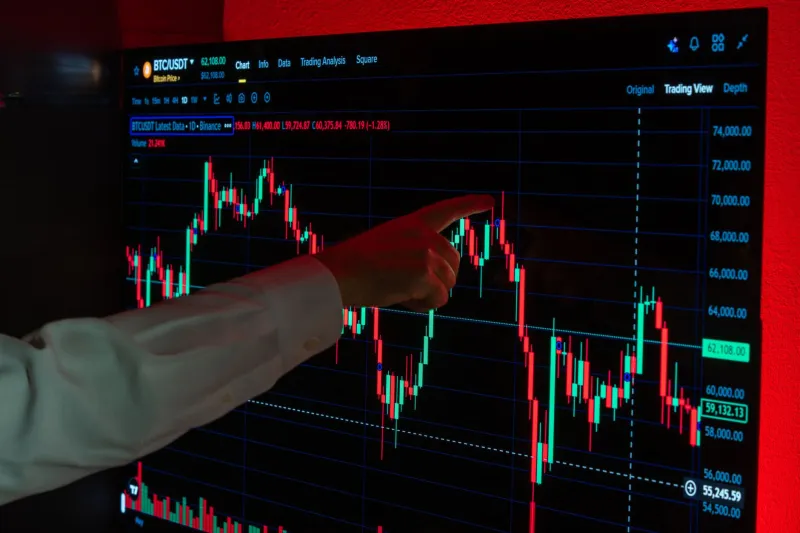
When Markets Freefall in Seconds: A Tactical Defense Guide for Crypto Traders Caught in a Flash Crash
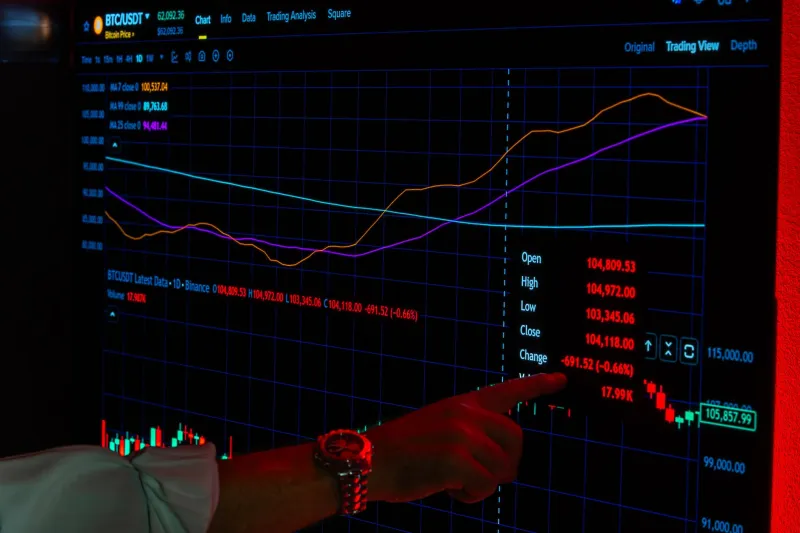
At 2:47 a.m. on a Tuesday in March 2020, Bitcoin shed nearly 40 percent of its value within hours. For traders with leveraged positions and poorly placed stop-losses, the damage was catastrophic and irreversible. For a smaller group who had constructed defensive frameworks in advance, that same event became one of the most profitable entries of the decade.
The difference between those two outcomes was not luck. It was preparation.
Cryptocurrency markets operate continuously, and TigerExch247's 24/7 trading environment means that dislocations can occur at any hour — during a Sunday morning, on a federal holiday, or in the dead of night when liquidity is thin and volatility is amplified. Flash crashes are not anomalies. They are a structural feature of markets that never close, and every serious US crypto trader must have a playbook ready before the next one arrives.
What a Flash Crash Actually Looks Like
A flash crash is not simply a sharp decline. It is a rapid, extreme price movement — typically occurring within seconds to a few minutes — that is often followed by a partial or full recovery. The speed is what makes it uniquely dangerous.
In May 2021, Ethereum briefly collapsed from approximately $2,400 to under $700 on certain derivative exchanges during a broader market rout, triggering cascading liquidations that accelerated the drop. In June 2022, a coordinated wave of forced selling across lending platforms sent multiple assets into near-vertical freefall. These were not slow deteriorations. They were instantaneous structural failures in market liquidity.
Flash crashes are typically triggered by one or more of the following: a large market sell order hitting a thin order book, a cascade of automated liquidations feeding on each other, oracle price manipulation on decentralized platforms, or sudden macro news events striking during low-volume hours.
Understanding the mechanism matters because the defense must be designed around the cause, not just the symptom.
The First Line of Defense: Position Sizing Before Entry
The most effective protection against a flash crash is not reactive — it is structural. Position sizing is the foundational discipline that determines whether a sudden 30 percent drawdown is a manageable inconvenience or a portfolio-ending event.
A common framework used by experienced traders is the one-to-two percent rule: no single position should risk more than one to two percent of the total portfolio on any given trade. This is not a conservative suggestion for timid investors. It is an actuarial reality. If a flash crash triggers a stop-loss on five simultaneous positions, a trader risking two percent per position loses ten percent of their portfolio. A trader risking ten percent per position loses half.
Leverage compounds this problem exponentially. A five-times leveraged position can be fully liquidated on a fifteen percent move. During a flash crash, fifteen percent can vanish in under thirty seconds.
The discipline required here is uncomfortable for traders who are accustomed to sizing up on high-conviction trades. However, conviction does not immunize a position against a liquidity vacuum. The market does not care about your thesis when a whale sell order hits an empty order book at 3 a.m.
Stop-Loss Architecture: Placement Is Not Enough
Most retail traders know that stop-losses exist. Far fewer understand how to place them effectively in a flash crash environment.
The core problem is that standard stop-loss orders become market orders when triggered. In a flash crash, where the bid side of the order book has effectively collapsed, a triggered stop-loss can execute at a price dramatically worse than intended. This is known as slippage, and during a dislocation event, it can be severe enough to turn a managed loss into a catastrophic one.
Several tactical adjustments address this vulnerability. First, consider using stop-limit orders rather than standard stop-market orders. A stop-limit order triggers at your stop price but only executes at or above your limit price. The risk is that in a true freefall, the order may not fill at all — but that outcome is often preferable to filling at a 25 percent discount to your intended exit.
Second, avoid placing stops at obvious round numbers or near widely-watched technical levels. During a flash crash, initial price movement often overshoots these levels before recovering. A stop placed at $30,000 on Bitcoin, for example, may trigger during a wick that immediately reverses — locking in a loss on a position that would have recovered within minutes.
Third, layered stop placement — distributing your exit across a range of prices rather than a single level — reduces the risk of a full position being liquidated on a momentary spike.
Liquidity Awareness as a Tactical Skill
The depth of the order book is not a static background condition. It is a dynamic variable that directly affects how dangerous any given moment is for an open position.
Experienced traders monitor order book depth before entering positions, particularly during off-peak hours. Thin books mean that a single large order can move price dramatically. When the book is thin and your position is sized without accounting for that reality, you are effectively trading in a different risk environment than you may have assumed.
On TigerExch247's platform, monitoring real-time order book data before entering or holding positions through low-liquidity windows is a practice that pays consistent dividends. The hours between midnight and 6 a.m. Eastern Time are historically associated with reduced liquidity and, consequently, greater susceptibility to flash events.
This does not mean traders should avoid these hours. It means position sizes and stop placements should be calibrated to reflect the actual risk environment, not the idealized one.
The Counterintuitive Opportunity
Flash crashes are not exclusively threats. For traders who maintain dry powder — uncommitted capital held in reserve — they represent some of the most asymmetric buying opportunities the market produces.
The recovery following a flash crash is often swift. When a cascade of liquidations causes a temporary price collapse that is not supported by fundamental deterioration, the subsequent rebound can be equally sharp. Traders who have pre-set limit buy orders below current market prices — sometimes called a "crash ladder" — can accumulate meaningful positions at prices that exist for only minutes or seconds.
This strategy requires preparation, not reaction. The orders must be placed before the crash occurs, at levels where you have already decided the risk-reward justifies entry. Attempting to manually enter orders during an active crash is an exercise in frustration and poor execution.
Building the Playbook Before You Need It
The traders who navigate flash crashes successfully are not faster or luckier than those who don't. They are more prepared. They have established position size limits that reflect realistic downside scenarios. They have placed stops with slippage in mind. They have studied the order book depth of their preferred markets. And they have pre-set limit orders at levels where they would be genuinely willing to add exposure.
Crypto markets running around the clock mean that the next flash crash will not wait for convenient timing. It will arrive at an inconvenient hour, on an inconvenient day, and it will test every assumption embedded in your current portfolio structure.
The playbook is not complicated. But it must be written before the market forces your hand.