The Hidden Cost of Every Click: How Slippage Is Quietly Eroding Your Crypto Returns
There is a moment familiar to nearly every active crypto trader: you spot a price, you click buy, and by the time the order confirms, the number on your screen is slightly different from the number in your trade history. Most traders shrug it off. A few basis points, they tell themselves. It happens. Move on.
That shrug is costing them money — sometimes a great deal of it.
Slippage is not a glitch. It is not a fee buried in fine print. It is a structural feature of how digital asset markets operate, and for retail traders executing on centralized exchanges without the tools or access that institutional desks enjoy, it functions as a quiet but persistent tax on every transaction. Understanding it is not optional for anyone serious about building wealth through crypto.
What Slippage Actually Is — and Why It Is Not What Most Traders Think
Slippage refers to the difference between the price at which a trader expects to execute an order and the price at which that order actually fills. In a perfectly liquid, perfectly static market, slippage would not exist. Every order would fill at exactly the quoted price. But crypto markets are neither perfectly liquid nor static — they are fast, fragmented, and volatile, particularly during the windows when most retail traders are most active.
When you place a market order to buy, say, $5,000 worth of a mid-cap altcoin, the exchange does not fill that order from a single seller at a single price. It works through the order book, matching your buy against available sell orders at progressively higher price levels until the full amount is filled. If there is not enough depth at the quoted price, your order consumes liquidity up the book — and your average fill price ends up higher than what you saw when you clicked.
This is positive slippage for sellers and negative slippage for buyers. In volatile conditions, the gap between expected and actual price can widen dramatically.
Why Retail Traders Absorb More Slippage Than Institutions
Institutional trading desks do not simply place market orders on a public exchange interface. They use algorithmic execution strategies — time-weighted average price algorithms, volume-weighted approaches, dark pool access, and direct market-maker relationships — specifically designed to minimize market impact and reduce the price movement their own orders create.
Retail traders have none of this infrastructure. They are placing market orders through a standard interface, often during periods of heightened volatility when spreads are widest and order book depth is thinnest. They are, in effect, the liquidity that institutions are trading against.
Consider a concrete example. A trader in Chicago decides to buy $10,000 worth of a popular layer-1 token during a sharp price spike following a major protocol announcement. The displayed price is $4.82. The order executes — but because volume is surging and the order book is thin, the average fill comes in at $4.97. That is a 3.1% slippage event on a single trade.
Three percent sounds manageable in isolation. Over the course of a year, it is not.
How Slippage Compounds Into Real Portfolio Damage
Assume that same trader executes twenty similar trades over twelve months — a conservative estimate for anyone actively repositioning a crypto portfolio. If each trade carries an average slippage of just 1.5%, the cumulative drag on a $10,000 base position is approximately $3,000 in execution losses before any market movement is considered. At 3% average slippage across twenty trades, that figure doubles.
This is not hypothetical. Research into retail execution quality consistently finds that individual traders systematically underperform their intended entry and exit prices due to a combination of slippage, spread costs, and timing friction. In crypto markets, where volatility is structurally higher than in equities, those costs are amplified.
The damage is not limited to entries. Exit slippage during a panic sell — when everyone is moving in the same direction and order books thin out precisely when you need depth most — can be far worse than anything experienced on the buy side. A trader who bought well but sold into a collapsing order book may find that execution losses erased a meaningful portion of their gain.
Practical Strategies for Reducing Slippage Exposure
The good news is that slippage is not entirely beyond a retail trader's control. Several disciplined practices can meaningfully reduce execution losses over time.
Use limit orders instead of market orders. A limit order specifies the maximum price you are willing to pay. If the market moves beyond that level, your order does not fill — but you are guaranteed not to pay more than your specified price. For traders who are not chasing momentum in real time, limit orders are almost always the superior choice.
Trade during periods of higher liquidity. Order book depth in crypto markets fluctuates significantly across the day. Major pairs like Bitcoin and Ethereum tend to carry tighter spreads and deeper books during overlapping US and European trading hours — roughly 8:00 AM to 12:00 PM Eastern time. Executing trades during these windows reduces the likelihood of significant slippage on larger orders.
Break large orders into smaller tranches. Rather than placing a single $20,000 market order, consider executing in four $5,000 increments spaced several minutes apart. This approach reduces your individual market impact and allows the order book to partially replenish between fills. It is a simplified version of what institutional desks do with algorithmic execution.
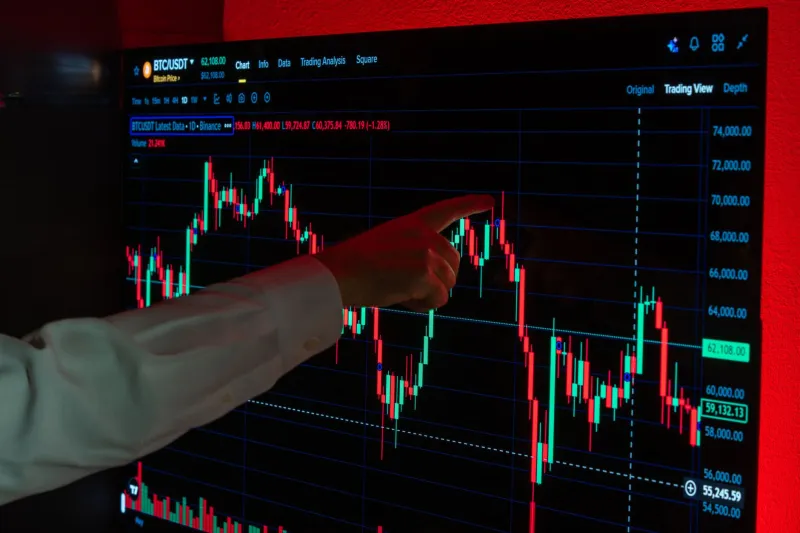
Monitor order book depth before executing. Most exchanges display a live order book alongside the price chart. Before placing a significant order, check whether there is adequate depth at and near the current price. If the visible sell-side depth is thin, even a modestly sized order can move the price against you.
Set slippage tolerance explicitly on decentralized platforms. If you are trading on a decentralized exchange, most interfaces allow you to set a maximum slippage tolerance before confirming a swap. Setting this conservatively — typically 0.5% to 1% for major pairs — prevents your transaction from filling at an unacceptable price during a sudden market move.
Treating Execution Quality as a Performance Metric
The most disciplined traders do not evaluate performance solely by whether a position was profitable. They also examine whether their execution was efficient. Tracking slippage on each trade — comparing the expected price at order placement against the actual average fill — creates an honest record of execution quality over time.
This data is instructive. It reveals which market conditions tend to produce the worst fills, which asset types carry the most execution risk, and whether a trader's habits around order timing and type are costing them money before the market has even had a chance to move.
At TigerExch247, we believe that trading smarter begins long before a position shows a profit or loss. It begins at the moment of execution — with an understanding that every click carries a cost, and that cost is negotiable for traders who know what they are doing.
Slippage will never be zero. But for the informed, disciplined trader, it can be managed, minimized, and accounted for as a real line item in any serious performance review. The traders who treat execution quality as a competitive edge are the ones who keep more of what the market gives them — and that difference, compounded across a year of active trading, is anything but trivial.