Speed Is the Trade: Why Execution Latency Is Silently Costing US Crypto Traders Real Money

There is a moment every active crypto trader knows well. The price is moving. You have made your decision. You click. And then — almost imperceptibly — there is a gap. By the time your order confirms, the market has shifted. You filled at a price you did not intend, at a level you would not have accepted if you had seen it first.
That gap has a name: execution latency. And for most US traders, it is one of the most financially significant forces they never think to measure.
The Invisible Gap Between Intent and Execution
In traditional equity markets, execution speed is treated as a competitive advantage worth billions of dollars in infrastructure investment. High-frequency trading firms spend extraordinary sums locating their servers as physically close as possible to exchange matching engines — a practice called co-location — precisely because microseconds matter when prices are moving fast.
Crypto markets operate on the same fundamental logic, but with an important distinction: they run continuously, around the clock, across fragmented global venues. When volatility spikes — during a Federal Reserve announcement, a major on-chain event, or a sudden liquidation cascade — prices in crypto can move several percentage points within seconds. In that environment, the difference between a 200-millisecond execution and a 600-millisecond execution is not theoretical. It is a real number on your trade confirmation.
Yet most retail traders in the United States evaluate platforms almost entirely on surface-level criteria: fee schedules, available trading pairs, interface design. Execution speed rarely enters the conversation until something goes noticeably wrong.
What Latency Actually Looks Like in Practice
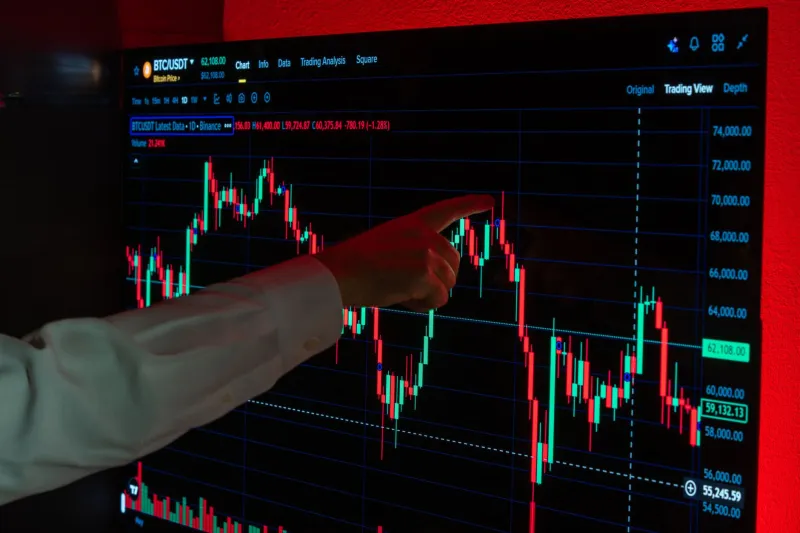
Consider a straightforward scenario. Bitcoin is trading at $67,400. A catalyst hits — perhaps a large ETF outflow report or a sudden shift in stablecoin flows on-chain. The price begins moving sharply downward. A trader places a market order expecting to exit near $67,200, accepting a modest loss to manage risk.
If the platform processes and routes that order in under 200 milliseconds, the fill might land close to the intended price. If internal processing delays, API congestion, or routing inefficiencies push that execution window to 800 milliseconds or more, the trader may fill at $66,900 or lower — a difference of $300 per Bitcoin that never appears as a fee, never shows up in a cost-basis report, and is almost never attributed to platform performance.
This is the insidious nature of latency-driven loss. It disguises itself as market movement. It feels like bad luck rather than a structural disadvantage.
Why 24/7 Availability Is Not the Same as Reliable Execution
Many trading platforms prominently advertise round-the-clock access to crypto markets. That claim is technically true for most reputable services. But availability and execution quality are entirely separate dimensions of platform performance.
A platform can be online at 3:00 a.m. Eastern time and still route your order through an overloaded matching engine, a congested API gateway, or a third-party liquidity aggregator experiencing its own internal delays. During periods of peak global volatility — which do not observe US business hours — execution quality on platforms that have not invested adequately in infrastructure can degrade significantly.
For US traders who rely on automated alerts or who actively trade during Asian and European market sessions, this distinction is especially consequential. The hours when American traders sleep are often precisely the hours when global crypto volatility concentrates. Execution reliability during those windows is not a convenience feature. It is a core performance variable.
How to Audit Your Own Order Fills
The good news is that execution quality is measurable, even without access to institutional-grade tools. US traders can conduct a basic audit of their platform's performance using data that most exchanges already provide.
Start with your trade history. Export your confirmed fills and compare the execution price to the price shown on a reference chart — ideally one sourced from a neutral aggregator — at the exact timestamp of your order submission. If you are consistently filling several basis points worse than the mid-market price at the moment you placed the order, that gap warrants investigation.
Examine fills during volatile windows specifically. Latency problems do not manifest uniformly. A platform may perform adequately during quiet overnight sessions and degrade substantially during high-volume periods. Filter your trade history for orders placed during the thirty minutes following major news events or during periods of elevated volume. If your execution quality deteriorates measurably during those windows, you have identified a structural problem rather than a random pricing anomaly.
Test with small orders during known volatility. If you want a more direct assessment, place a small market order during a period of visible price movement and immediately compare your fill to the publicly available price feed at that moment. Repeat this several times across different market conditions. The pattern that emerges will tell you more about your platform's real execution quality than any marketing claim.
The Compounding Cost Over Time
Individual instances of latency-driven slippage may appear modest in isolation. A trader who loses an average of 0.08% per trade to execution delays might not notice it in any single transaction. But traders who execute dozens of positions per month accumulate those losses steadily.
Applied across a year of active trading, consistent execution friction of that magnitude can meaningfully erode returns — particularly for traders operating with tighter profit targets or shorter holding periods. For strategies that depend on capturing small, frequent gains, execution quality is not a secondary concern. It is the foundation on which the entire approach either succeeds or fails.
This is why sophisticated US traders treat platform selection as a strategic decision rather than a logistical one. The exchange you use is not merely a gateway to the market. It is an active participant in every trade you make, and its infrastructure quality directly influences your outcomes.
Choosing Infrastructure, Not Just Features
When evaluating a trading platform, the questions worth asking go beyond fee tiers and charting tools. What matching engine architecture does the platform operate? How does it handle order routing during periods of high market stress? Does it maintain dedicated liquidity relationships, or does it rely on third-party aggregation that introduces additional latency layers?
Transparent platforms will provide at least some information about their infrastructure. Those that cannot or will not answer these questions clearly are telling you something important about where execution quality ranks in their priorities.
For traders who are serious about performance — not just access — execution speed is not a technical footnote. It is the mechanism through which every market insight, every analytical edge, and every carefully timed decision either reaches the market intact or arrives fractionally too late.
The Timestamp Is the Trade
Crypto markets are unforgiving precisely because they are continuous. There is no closing bell, no overnight pause, no moment when the score resets. Every order timestamp is a permanent record of the distance between your intention and the market's reality.
For US traders who take their performance seriously, closing that distance — through platform selection, order type discipline, and regular execution audits — is one of the few genuine edges available without requiring superior information or exceptional market timing.
The traders who thrive over the long term are not always the ones with the best analysis. They are frequently the ones whose trades arrive at the market closest to the moment they were meant to.