Believing Long, Protecting Short: The Disciplined Art of Hedging Positions You Actually Trust
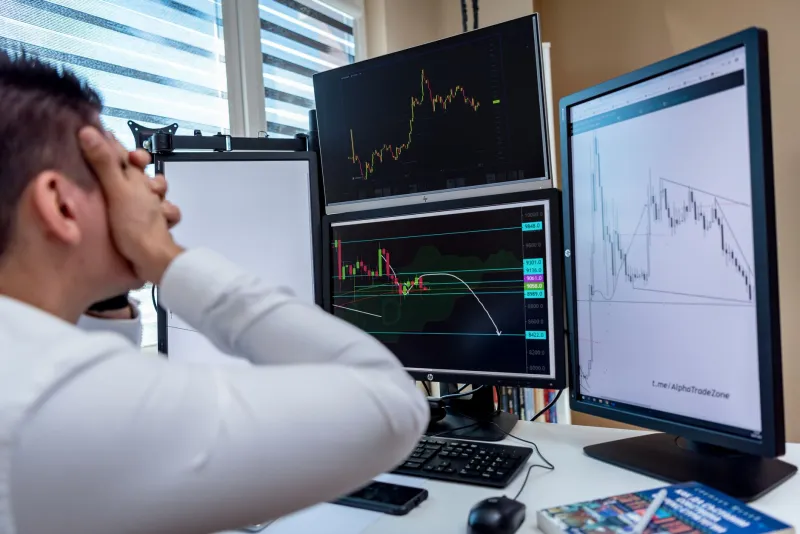
There is a particular kind of confidence that gets crypto traders into serious trouble. It is not recklessness or ignorance — it is conviction. The unwavering belief that a position is correct, that the thesis is sound, and that holding through volatility is simply the price of long-term success. This mindset has produced extraordinary returns for some investors. It has also wiped out portfolios that took years to build, in a matter of hours.
The traders who consistently preserve and grow capital over multiple market cycles share a discipline that feels almost paradoxical at first: they maintain positions that work against the very assets they believe in most. This is not indecision. It is not a lack of conviction. It is strategic hedging — one of the most underutilized risk-management tools available to US crypto traders operating in a market that runs 24 hours a day, seven days a week, with no circuit breakers and no margin calls from a sympathetic broker.
The Difference Between a Thesis and a Guarantee
Every experienced trader understands intellectually that markets can be wrong for longer than any individual account can remain solvent. Yet when personal conviction is involved — when you have done the research, tracked the on-chain data, and built a genuine long-term case for an asset — that intellectual understanding has a way of fading during moments of real pressure.
Consider a trader who has accumulated a substantial Bitcoin position based on sound macro reasoning: institutional adoption, fixed supply dynamics, and growing regulatory clarity in the United States. Every element of that thesis may be entirely correct. And yet, Bitcoin has historically experienced drawdowns exceeding 30 percent within a matter of days, triggered by events entirely unrelated to its fundamental value — regulatory announcements from foreign governments, exchange insolvencies, or sudden shifts in global liquidity conditions.
The thesis does not protect the portfolio. Only structure does.
What a Hedge Position Actually Accomplishes
A hedge, in its most practical form, is a position designed to generate profit when your primary position loses value. In crypto markets, this can take several forms: short futures contracts on the same asset, put options where available, inverse ETF products for Bitcoin-exposed equities, or even strategic allocations into negatively correlated assets during periods of anticipated volatility.
The goal is not to neutralize your position entirely — that would defeat the purpose of holding it in the first place. The goal is asymmetric protection: limiting downside exposure during high-risk windows while preserving the majority of upside participation during favorable conditions.
A trader holding $200,000 in Ethereum, for example, might allocate 10 to 15 percent of that notional value into a short futures position during periods of elevated funding rates, unusual exchange inflows, or deteriorating macro conditions. If Ethereum drops 25 percent, that hedge does not fully offset the loss — but it meaningfully reduces the damage and, critically, it preserves the emotional and financial capacity to hold the remaining position through the recovery.
This last point is more important than most traders acknowledge. Catastrophic losses are not just financial events. They are psychological ones. A trader who watches a $200,000 position fall to $90,000 without any protective structure in place is far more likely to capitulate at the bottom than one who has partially cushioned the drawdown. The hedge does not just save dollars. It saves the decision-making capacity that long-term wealth building requires.
The Mechanics of Sizing a Hedge Without Undermining Your Conviction
The most common objection to hedging is that it dilutes returns. This is mathematically accurate in isolation. If your primary position gains 40 percent and your hedge costs you 5 percent of that gain, you have, on paper, underperformed a pure long position. But this calculation ignores the full range of possible outcomes — including the ones that end trading careers.
Sizing a hedge appropriately requires honest assessment of two variables: the magnitude of loss you can absorb without compromising your strategy, and the probability of an adverse move given current market conditions. These are not fixed numbers. They change with market structure, and disciplined traders adjust their hedge ratios accordingly.
During periods of low volatility and constructive market conditions, a hedge position of 5 to 10 percent of notional exposure may be sufficient. During periods of elevated uncertainty — approaching major Federal Reserve decisions, congressional hearings on crypto regulation, or historically volatile seasonal windows — increasing that coverage to 20 or 25 percent is a rational response to measurable risk, not a retreat from conviction.
Platforms like TigerExch247 provide the round-the-clock access necessary to adjust these positions in real time. Markets do not wait for business hours to deliver bad news, and a hedge structure that cannot be modified at 2 a.m. on a Sunday is only partially functional.
Real-World Scenarios Where Hedges Have Preserved Portfolios
In May 2021, Bitcoin fell approximately 50 percent in a matter of weeks following a combination of regulatory commentary from Chinese authorities and environmental concerns raised by a prominent technology executive. Traders with unhedged long positions who had entered near cycle highs faced devastating losses. Those who had established short futures positions — even modest ones representing 15 percent of their notional exposure — reduced their effective drawdown by a meaningful margin and retained the liquidity and composure to accumulate at lower prices.
A similar dynamic played out in November 2022, when the collapse of a major centralized exchange triggered contagion across the broader crypto market. Long-term believers in Bitcoin and Ethereum saw their positions fall sharply not because their thesis was wrong, but because a structurally unrelated event created forced selling across the entire asset class. Hedges placed in anticipation of elevated counterparty risk in the weeks prior would have partially offset those losses.
In both cases, the traders who fared best were not those who predicted the exact catalyst. They were the ones who acknowledged that high-conviction positions still exist within a market capable of generating extreme, rapid losses from unexpected sources.
Maintaining Intellectual Honesty About Your Hedge
One discipline that separates effective hedgers from those who simply complicate their portfolios is the practice of treating the hedge as a distinct, rules-based position rather than an emotional reaction. A hedge should be entered with a defined target, a defined exit condition, and a defined maximum size. It should not be expanded in a panic or collapsed prematurely out of impatience.
Equally important is the willingness to close a hedge when conditions no longer justify it. Carrying a short position on an asset you fundamentally believe in, beyond the window of elevated risk that prompted it, is a different kind of error — one that erodes returns without providing meaningful protection.
The discipline required to hedge well is the same discipline required to trade well in any context: clarity of purpose, adherence to a plan, and the intellectual honesty to separate what you believe from what the market is currently doing.
Conviction Is an Asset. Structure Is Its Guardian.
The most successful long-term crypto investors in the United States are not the ones who held through every drawdown without flinching. Many of those traders no longer have portfolios to manage. The ones who have built and preserved substantial wealth are those who understood that believing in an asset and protecting a position are not competing priorities — they are complementary disciplines.
Hedging does not mean you are wrong about your thesis. It means you are serious enough about it to ensure you are still in the market when it is proven right.
At TigerExch247, the tools to build, monitor, and adjust these structures are available around the clock. The only variable is whether traders choose to use them.