The Keys You Can't Lose: What It Actually Takes to Master Self-Custody After Leaving an Exchange
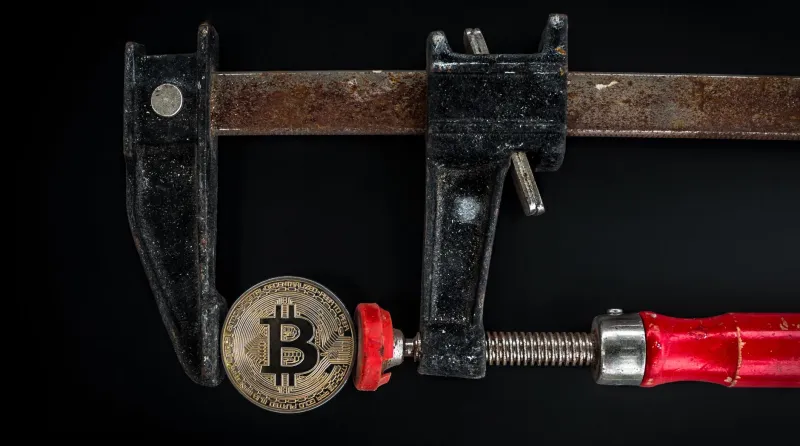
For a growing number of American crypto holders, the decision to withdraw assets from an exchange feels less like a financial maneuver and more like a moral one. After high-profile platform failures, frozen withdrawals, and insolvency events that left retail investors scrambling, the appeal of holding your own private keys has never been stronger. The logic is straightforward: if you control the keys, no one can take your assets.
But that logic, while sound, conceals a challenge that many traders underestimate until they are standing directly inside it. Self-custody does not simply relocate your assets. It relocates every ounce of responsibility that came with them.
The Psychological Shift Nobody Warns You About
When you trade on a centralized platform, there is an invisible safety net you rarely think about. Forgot your password? Customer support can help. Suspicious login attempt? The platform's security team is monitoring. Made an erroneous transaction? Some exchanges have internal resolution processes. None of these options exist in self-custody. The network does not know your name, does not answer emails, and does not have a recovery department.
This is the first and most disorienting adjustment. Traders who have spent months or years operating within the structured environment of an exchange often experience a subtle but persistent anxiety when they first take full custody of their assets. That feeling is not irrational — it reflects a genuine transfer of accountability. The question is whether a trader can channel that anxiety into discipline rather than paralysis or, worse, recklessness born from overconfidence.
Research into decision-making under financial pressure consistently shows that humans tend to underestimate low-probability, high-consequence events. In self-custody terms, this means most people believe they will remember where they stored their seed phrase, that their hardware wallet will always function, and that their backup system is sufficient — right up until the moment they discover it is not.
What Self-Custody Actually Requires
Managing your own private keys is not a one-time setup task. It is an ongoing operational commitment with several distinct layers.
Private Key Generation and Storage The security of a self-custody wallet begins at the moment of creation. Using a hardware wallet — a physical device that keeps private keys offline — remains the most widely recommended approach for long-term holders in the US. The generation process itself should occur on a device that has never been connected to the internet, in an environment free of cameras or screen-recording software. These precautions sound excessive until you understand that malware capable of capturing seed phrases during wallet setup has been documented in the wild.
Seed Phrase Management The 12- or 24-word recovery phrase generated during wallet setup is not a password. It is the master key to every asset in that wallet, permanently and irrevocably. Anyone who possesses it owns your funds. Anyone who destroys it — including you, through carelessness — may render those funds permanently inaccessible.
This creates a security paradox that trips up even technically sophisticated traders. Storing the phrase digitally, in a cloud service or password manager, exposes it to remote compromise. Storing it only on paper introduces physical risks: fire, water damage, deterioration, or simple loss. The traders who master self-custody typically implement layered, redundant physical storage — metal seed phrase backups stored in geographically separate locations, sometimes with trusted individuals under clearly defined legal arrangements.
Inheritance and Continuity Planning This is the dimension most American crypto holders ignore entirely. If you are the only person who knows where your seed phrase is stored and how to access it, your assets may effectively disappear when you do. Self-custody demands that holders think through succession — not just for catastrophic scenarios, but for the more mundane reality of incapacitation or accident. Some holders work with estate attorneys to formalize these arrangements. Others use multisignature wallet structures that require more than one key to authorize transactions, distributing access without exposing any single point of failure.
Why Traders Abandon Self-Custody After the First Close Call
The pattern is well-documented in crypto communities across the US. A trader sets up a hardware wallet, transfers assets, feels a surge of empowerment — and then, somewhere between three and eighteen months later, returns to an exchange. What happened?
In most cases, they experienced a close call. Maybe they temporarily could not locate their seed phrase backup. Maybe their hardware wallet failed and they discovered their recovery process was less rehearsed than they believed. Maybe they upgraded devices without fully understanding the export process and spent forty-eight harrowing hours wondering if they had lost everything.
These events rarely result in actual loss, but they expose the gap between the idea of self-custody and the operational reality of it. Traders who revert to exchange custody after such experiences often cite the emotional cost as much as the practical complexity. The stress of knowing that a single mistake is irreversible is, for many people, not a trade-off they are willing to sustain.
What Separates Those Who Master It
The traders who successfully maintain self-custody long-term share several characteristics that have less to do with technical expertise than with behavioral discipline.
First, they treat their custody setup as a living system rather than a completed project. They conduct periodic recovery drills — actually testing that their backup process works, rather than assuming it does. They document their setup clearly enough that a trusted person with no crypto knowledge could follow the instructions in an emergency.
Second, they resist the temptation to optimize for convenience. One of the most common self-custody errors is creating workarounds — saving a photo of the seed phrase on a phone, storing it in a notes app, or emailing it to yourself "just temporarily." Each convenience measure introduces a vulnerability. The traders who thrive in self-custody have internalized that friction is the security model, not an obstacle to it.
Third, they match their custody approach to their actual holdings and behavior. Not every asset needs to live in the most secure possible arrangement. A portion of holdings kept on a reputable exchange for active trading, with longer-term positions in cold storage, is a rational architecture for many US traders. The goal is not ideological purity but practical security calibrated to risk.
The Honest Assessment
Self-custody is not right for every trader at every stage. For someone still learning the fundamentals of crypto markets, adding the operational complexity of private key management may create more risk than it eliminates. For a disciplined trader who has taken the time to understand the commitment involved and build a robust system around it, self-custody represents a meaningful reduction in counterparty exposure.
The paradox at the heart of this transition is real: the act of removing a trusted intermediary does make you safer from platform failure, but only if you are genuinely prepared to replace everything that intermediary was quietly providing. Most traders discover the depth of that list only after they have already made the move.
Approaching self-custody with honesty about your own discipline, your backup infrastructure, and your continuity planning is not pessimism. It is the same analytical rigor that separates successful traders from impulsive ones — applied not to a price chart, but to the foundation beneath your entire portfolio.