The Quiet Anchor: How Disciplined US Traders Use Stablecoins to Stay Ready When Crypto Gets Turbulent

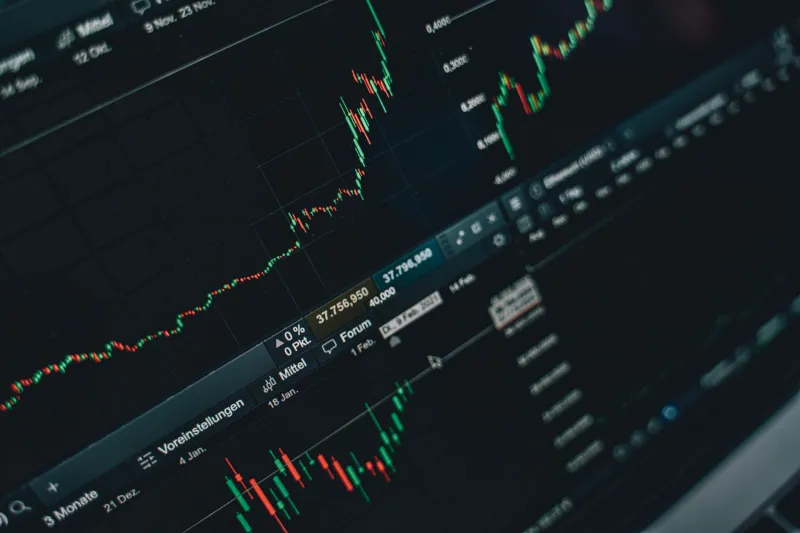
Photo: stablecoin digital currency portfolio stability trading screen, via www.financedispatch.com
Cryptocurrency markets never close. At 2:00 a.m. on a Tuesday, while most of the country is asleep, Bitcoin can swing 8% in either direction, altcoins can collapse without warning, and liquidity conditions can shift dramatically. For American traders operating in this environment, the question is rarely whether volatility will arrive — it is whether their portfolio is structured to survive and capitalize on it.
Stablecoins have become one of the most powerful answers to that question. Assets like USD Coin (USDC) and Tether (USDT) maintain a 1:1 peg to the US dollar, offering a refuge that keeps traders inside the crypto ecosystem without exposing them to the price swings of Bitcoin or Ethereum. But their utility extends well beyond simply sitting on the sidelines. Used strategically, stablecoins are a dynamic component of a well-constructed trading approach.
Understanding Why Stablecoins Matter in a 24/7 Market
Traditional financial markets operate within defined hours. The New York Stock Exchange opens at 9:30 a.m. and closes at 4:00 p.m. Eastern Time. Crypto has no such boundaries. This creates a unique challenge: a trader who converts crypto holdings to US dollars and withdraws to a bank account loses their ability to re-enter positions quickly when opportunity knocks at an unusual hour.
Stablecoins solve this problem elegantly. By holding USDC or USDT on a trading platform, a trader maintains instant purchasing power — ready to deploy capital the moment market conditions align with their strategy. There is no wire transfer delay, no banking hours to navigate, and no friction between observation and execution.
For US traders, USDC carries an additional layer of credibility. Issued by Circle and governed under US regulatory frameworks, USDC is fully backed by cash and short-duration US Treasury instruments, with monthly attestations published for public review. USDT, issued by Tether, remains the highest-volume stablecoin globally and offers deep liquidity across virtually every major trading pair.
Parking Capital During Volatile Periods
One of the most practical applications of stablecoins is straightforward: when a trader believes a market correction is imminent — or when uncertainty simply becomes too high to justify holding volatile assets — rotating into stablecoins preserves purchasing power without requiring an exit from crypto entirely.
Consider a scenario familiar to many American traders. Bitcoin has rallied 40% over six weeks. On-chain indicators suggest distribution by large holders. Macro conditions — an upcoming Federal Reserve rate decision, for instance — introduce uncertainty. Rather than holding through the turbulence or converting to dollars and losing platform positioning, a trader moves 50% of their Bitcoin holdings into USDC. The remaining 50% continues to participate in any further upside.
This approach, often called a partial hedge, manages downside exposure without requiring a trader to make a binary all-in or all-out decision. It acknowledges that timing the market precisely is nearly impossible while still responding intelligently to elevated risk.
Building a Stablecoin Hedging Framework
Effective stablecoin hedging is not reactive — it is planned. Traders who use stablecoins most effectively tend to define their hedge thresholds in advance, removing emotion from the decision.
A practical framework might look like this:
- Tier 1 — Mild caution (10–20% stablecoin allocation): Market conditions show elevated volatility but no clear directional breakdown. The trader maintains most exposure while setting aside a reserve for opportunistic buys.
- Tier 2 — Moderate caution (30–50% stablecoin allocation): Technical indicators suggest a potential trend reversal. Key support levels are being tested. The trader reduces exposure meaningfully while retaining the ability to re-enter quickly.
- Tier 3 — High caution (70–90% stablecoin allocation): Macro conditions or on-chain data present significant downside risk. The trader prioritizes capital preservation and waits for confirmation of a new trend before redeploying.
Defining these tiers before market stress occurs means the decision to rotate into stablecoins becomes a measured, rule-based action rather than a panic response.
Yield Opportunities: Making Stablecoins Work While You Wait
One of the most compelling developments in the stablecoin space is the ability to generate yield on capital that would otherwise sit idle. Decentralized finance (DeFi) protocols and centralized platforms alike offer stablecoin yield opportunities that transform a parked position into a productive one.
Stablecoin liquidity pools on platforms like Curve Finance have historically offered yields ranging from 3% to 8% annually, depending on market conditions and incentive structures. These pools pair stablecoins together — USDC with USDT, for example — minimizing the impermanent loss risk that affects pools containing volatile assets.
For US traders, it is worth noting that yield earned through DeFi protocols is generally treated as ordinary income by the IRS and should be reported accordingly. Consulting a tax professional familiar with digital assets is advisable before deploying capital into yield-generating strategies.
Centralized platforms may also offer stablecoin savings or earn programs, though traders should carefully evaluate counterparty risk before committing funds. The collapse of several centralized lending platforms in 2022 serves as a reminder that yield always carries associated risk — even when the underlying asset is stable.
Stablecoins and Dollar-Cost Averaging
Another underappreciated use case is pairing stablecoin reserves with a disciplined dollar-cost averaging (DCA) strategy. Rather than deploying a lump sum into Bitcoin or Ethereum at a single price point, a trader holds stablecoins and systematically converts a fixed amount into target assets at regular intervals — weekly or bi-weekly, for instance.
This approach reduces the psychological burden of timing the market and smooths out entry prices over time. A trader who holds $10,000 in USDC and converts $500 per week into Bitcoin over 20 weeks will accumulate positions across a range of price points, reducing the impact of any single adverse move.
Choosing Between USDC and USDT
Both USDC and USDT serve similar functions, but there are meaningful distinctions worth understanding.
USDC is generally favored by traders who prioritize regulatory transparency and US-based compliance frameworks. Its reserve composition is clearly documented, and its issuer operates under established US money transmission regulations. For traders who value institutional-grade assurances, USDC is a natural fit.
USDT, by contrast, offers unmatched liquidity across global exchanges. Its trading volume consistently exceeds that of any other stablecoin, meaning tighter spreads and faster execution in most markets. Traders who prioritize liquidity and trading pair availability often maintain USDT positions for active trading purposes.
Holding both is a practical approach — using USDC for longer-term parking and yield strategies while keeping USDT available for active trading pairs.
The Discipline Behind the Strategy
Stablecoins are not a passive tool. They require the same intentionality as any other component of a trading strategy. Holding 90% of a portfolio in stablecoins indefinitely is not hedging — it is avoidance. The goal is to maintain a dynamic allocation that reflects current market conditions while keeping capital positioned to act.
At TigerExch247, the principle of trading smarter means recognizing that sometimes the most intelligent position is one of readiness rather than exposure. Stablecoins provide that readiness — a quiet anchor in turbulent waters, always prepared to deploy when the moment arrives.